

Adobe Commerce Cloud · Enterprise flagship
Five storefronts. One shared catalog. An enterprise platform built to keep moving.
Scrip Companies operates a demanding B2B commerce ecosystem: five production storefronts share a catalog of roughly 80,000 SKUs while orders, payments, fraud decisions, tax, product data, and fulfillment must remain aligned with a legacy Ecometry ERP.
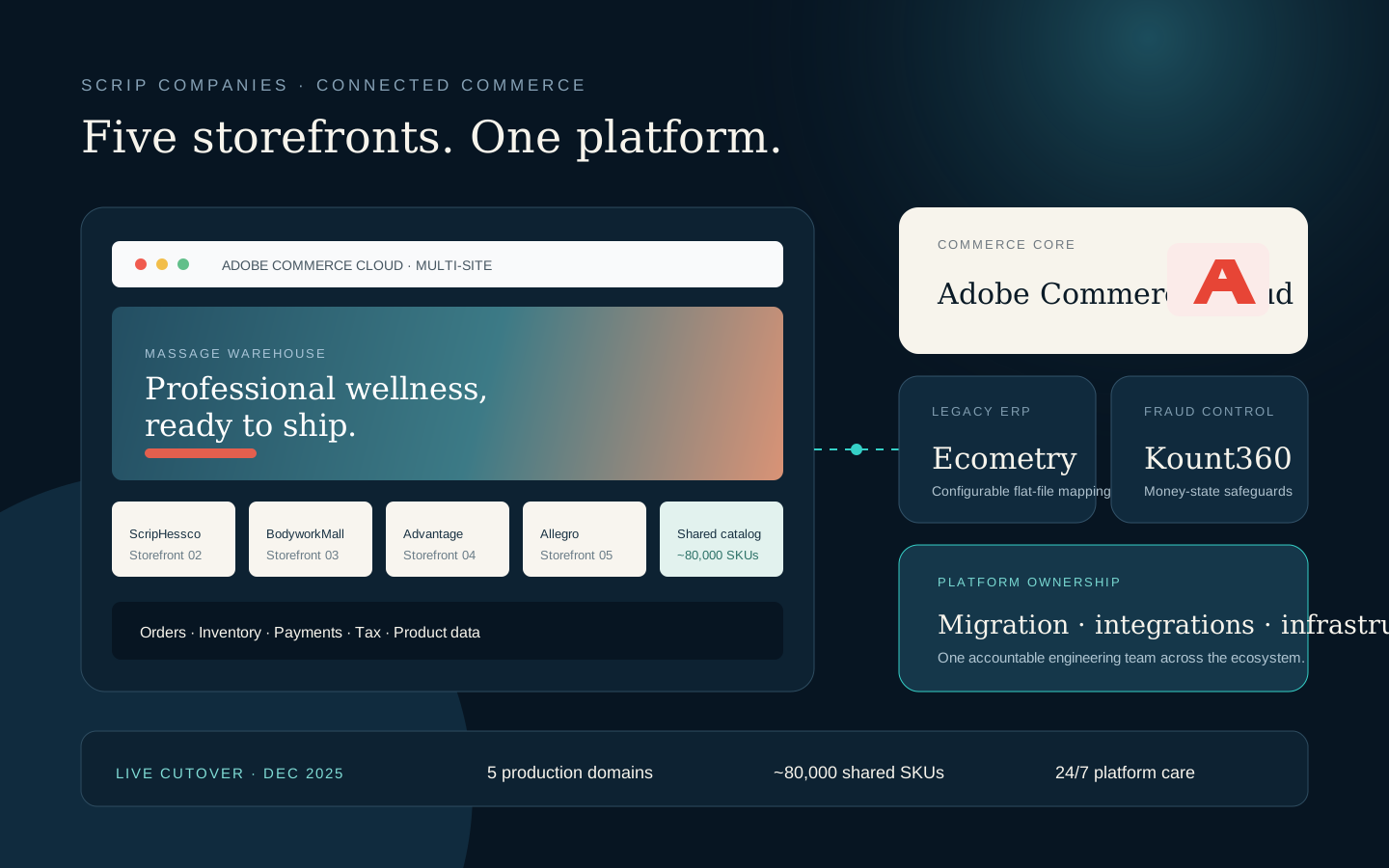
Complexity lived between the systems.
The difficult part was not a single migration. It was preserving the business behavior across five live brands while modernizing the platform beneath them. Ecometry exchanges flat files rather than APIs, payment and fraud decisions affect real customer money, and full product synchronization exposed infrastructure and processing limits.
02 · What we delivered
Built around the operating reality.
- Migrated all five production domains to Adobe Commerce Cloud, completing the live cutover in December 2025.
- Designed configurable Ecometry flat-file mappings, including the bundle behavior needed by the shared catalog.
- Implemented Kount360 fraud controls with safeguards for merchant overrides, post-approval declines, double refunds, and authorization-versus-capture behavior.
- Diagnosed a production Valkey snapshot failure caused by export volume, coordinated escalation with Adobe, and restored service.
- Re-architected a Laravel and Horizon product-information pipeline after profiling showed a full 80,000-SKU sync would take roughly 26 days.
03 · Outcome
A platform that can be owned, observed, and improved.
The result is a live five-storefront Adobe Commerce Cloud estate with operational safeguards around money movement, configurable legacy-ERP integration, documented bulk tools, and a clearer path toward modern product-information management.
Talk through a similar challenge →“The hard part isn’t detecting fraud. It’s making sure the detection result does the right thing to the customer’s money.”
Technology stack
Have a similarly complex project?
Bring us the storefront, ERP, or integration bottleneck.
We’ll help define a practical next step based on the systems, operating model, and business outcome involved.