Adobe Commerce NetSuite integration—and Magento NetSuite integration for teams still using that language—connects complex catalogs and B2B storefronts to ERP-owned inventory, orders, and finance. DevTeamPro designs the middleware, Celigo flows, and custom API work that stop manual order entry and keep fulfillments and refunds from disagreeing across systems.
Magento and Adobe Commerce to NetSuite programs that respect shared catalogs, customer groups, and operational exceptions—not a thin order dump that breaks under real warehouse behavior.
What we sync
Sync Magento catalogs and orders with NetSuite.
Sync objects we plan carefully for Adobe Commerce / Magento NetSuite integration.
Object
Direction
Frequency
Notes
Customers / companies
Commerce ↔ NetSuite
Near real-time or scheduled
Customer groups, shared catalogs, B2B accounts
Items / variants
NetSuite → Commerce or dual
Scheduled + event
Configurable products, bundles, attributes
Orders
Commerce → NetSuite
Near real-time
Multi-store, quotes, custom options
Inventory
NetSuite → Commerce
Scheduled + delta
Multi-source / MSI alignment with ERP locations
Fulfillments / tracking
NetSuite / 3PL → Commerce
Event-driven
Partial shipments, store scope
Refunds / returns
Commerce ↔ NetSuite
Event-driven
Credit memos, RMA, restock
Payments / deposits
Commerce → NetSuite
With order / capture
Payment methods, invoices, deposits
Gift cards
As designed
Event-driven
When Magento gift cards are in scope
Tax
Aligned at order time
Per transaction
Vertex/other tax engines vs NetSuite groups
Architecture
Connect Adobe Commerce to ERP and fulfillment.
01 · SourceAdobe Commerce
Orders, customers, and updates
02 · ConnectCeligo / APIs
Map data and automate workflows
03 · ERPNetSuite
Manage orders, inventory, and finance
04 · FulfillWarehouse / 3PL
Ship orders and return tracking
Monitoring & recovery
Track exceptions, retry failed updates, and reconcile records across systems.
Adobe Commerce (Magento) through Celigo or custom APIs into NetSuite, with 3PL feedback and controlled retries.
Connector options
Compare Magento–NetSuite connectors and custom APIs.
Compare connectors and custom development against your systems, business rules, and support needs.
Native or thin Magento–NetSuite connectors
Possible when Magento/Adobe Commerce and NetSuite stay close to standard order and item models.
When it is right: Narrow catalogs, limited multi-store complexity, and low customization on either side.
Trade-offs: Enterprise Magento estates rarely stay that simple—extensions and tax engines change the contract quickly.
Celigo Adobe Commerce / Magento and NetSuite flows
Useful when you need transforms, monitoring, and maintainable exception handling across ERP and commerce.
When it is right: Multi-store or B2B Magento programs where NetSuite owns inventory and financial posting.
Trade-offs: Requires strong item and customer identity design before flow build.
Custom SuiteScript, RESTlet, REST, or middleware
Required when configurable products, shared catalogs, or finance rules outgrow packaged integrations.
When it is right: Complex Magento catalogs, specialized tax engines, or fulfillment networks that need explicit contracts.
Trade-offs: Higher engineering and test investment; pair with observability and clear ownership.
Common failure points we fix
Resolve Magento catalog and ERP sync gaps.
Duplicate orders
A retry creates the same order twice. Match records by a stable order ID before creating or updating them.
Tax mismatches
Order totals differ between systems. Review the tax rules and mappings, including shipping, discounts, and exemptions.
Partial shipments
Only some items ship, but the update is missing or marks the whole order complete. Test each shipment and its tracking details.
Multi-location inventory
The store receives stock from the wrong location or includes quantities that cannot be sold. Check warehouse mappings and available-stock rules.
Product matching
A variant or kit maps to the wrong NetSuite item. Check product codes and the relationship between parent items and variants.
Missing refunds
A return or payment refund reaches one system but not the other. Check the refund, restock, and accounting steps together.
Implementation process
Plan your Adobe Commerce–NetSuite rollout.
Designed for daily operations
Connect the systems. Support the people.
Your teamClear ownership and less manual entry
Your dataConsistent records across systems
Your operationsMonitoring, recovery, and ongoing support
01
Discovery
List the orders, products, stock, shipping, and payment records that need to sync. Decide which system owns each field.
02
Mapping
Match the fields across systems. Agree the order of updates, how to prevent duplicates, and what happens if only part of a flow succeeds.
03
Build
Set up the connector and any custom code. Add logs and alerts so support staff can see failed updates.
04
Sandbox test
Test normal orders and failure cases in a test account. Include split shipments, refunds, tax differences, and stock from multiple warehouses.
05
Launch
Rehearse the switch, move the final data changes, and check the first records. Name the team that handles launch issues.
06
Monitoring
Review failed updates and compare records across systems. Keep retry steps, field mappings, and support instructions up to date.
Proof from production
Related Adobe Commerce and ERP experience.
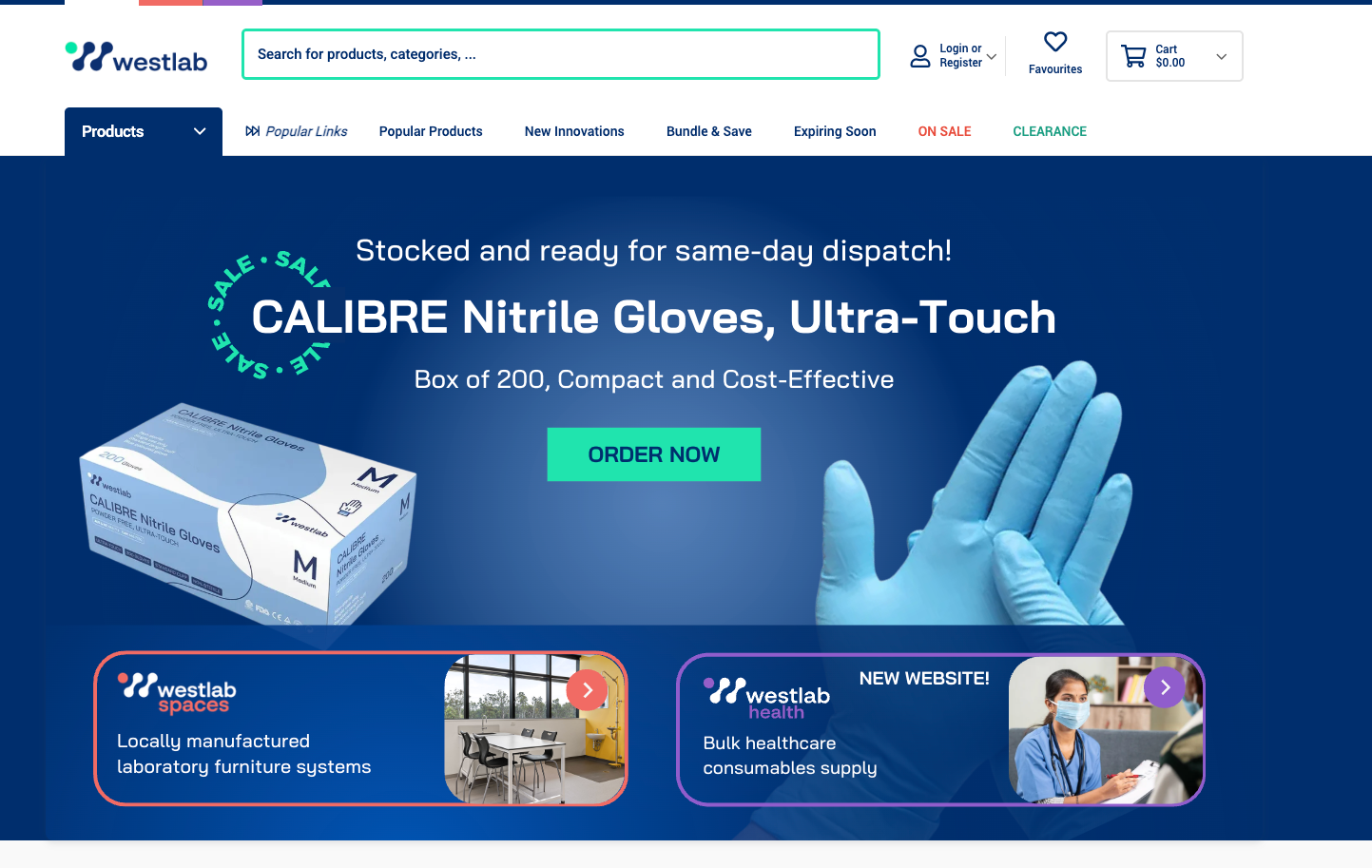
Westlab demonstrates our Magento and ERP delivery experience with Sage X3. It is a related architecture example, not a NetSuite implementation.
Is Magento NetSuite integration the same as Adobe Commerce NetSuite integration?+
Operationally yes for most buyers—the storefront stack is Magento/Adobe Commerce. We use the language your team searches with while designing against the actual platform edition in production.
What drives cost for Adobe Commerce NetSuite integration?+
Store count, catalog complexity, B2B rules, tax engines, inventory sources, historical data, and whether middleware already exists and needs recovery.
How long does Magento–NetSuite integration take?+
Pilot order flows can land relatively quickly; full inventory, multi-store, and refund/finance alignment usually needs phased delivery.
Celigo vs custom APIs for Magento and NetSuite?+
Celigo helps when observability and reusable flows matter. Custom APIs or SuiteScript are better when Magento extensions and NetSuite custom records create contracts templates cannot express.
Can you fix an existing Magento NetSuite integration?+
Yes. We inspect duplicates, tax mismatches, MSI/location drift, partial fulfillments, and refund gaps before remediating or rebuilding.
Do you offer ongoing support?+
Yes. Monitoring, exception handling, release readiness, and mapping improvements are available after cutover.